High-Wear-Resistance Crusher Liners: Creating a Robust Protective Barrier for Crushing Equipment
- 2026-07-29
- view count:
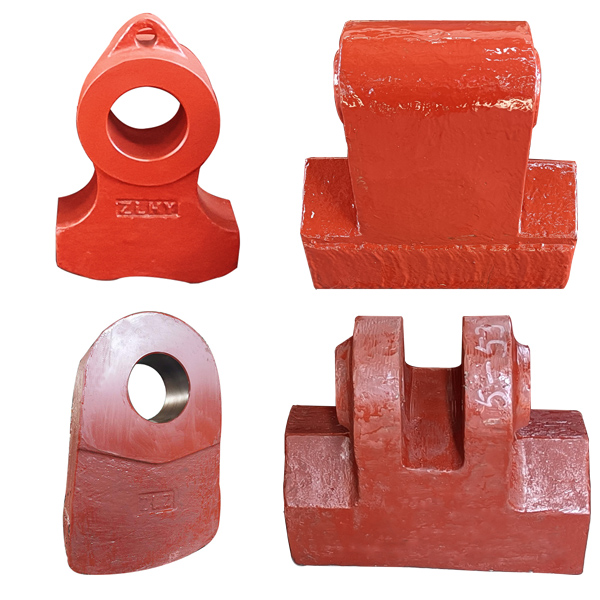
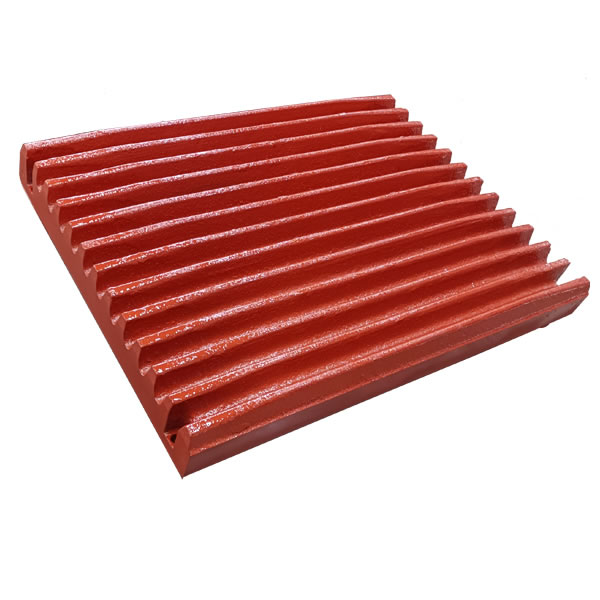
In industries such as mining, construction materials, and chemicals, crusher liners serve as critical wear-resistant components within crushing equipment. They must withstand intense impact and continuous abrasion from materials like ore and stone; consequently, the liner's wear resistance directly impacts operational stability, equipment service life, and production costs. Thus, these liners are pivotal to achieving lower consumption and higher efficiency across the production line.
Conventional liners often lack sufficient hardness and wear resistance. Under prolonged, high-intensity operating conditions, they frequently suffer from thinning due to wear, deformation, or even cracking. This necessitates frequent shutdowns for replacements, which slows down production schedules and increases spare part consumption. To address this, our high-wear-resistance crusher liners have been optimized and upgraded. We utilize premium wear-resistant materials—such as high-chromium alloys and high-manganese steel—combined with precision casting and heat treatment processes to ensure the product possesses both high hardness and superior toughness.
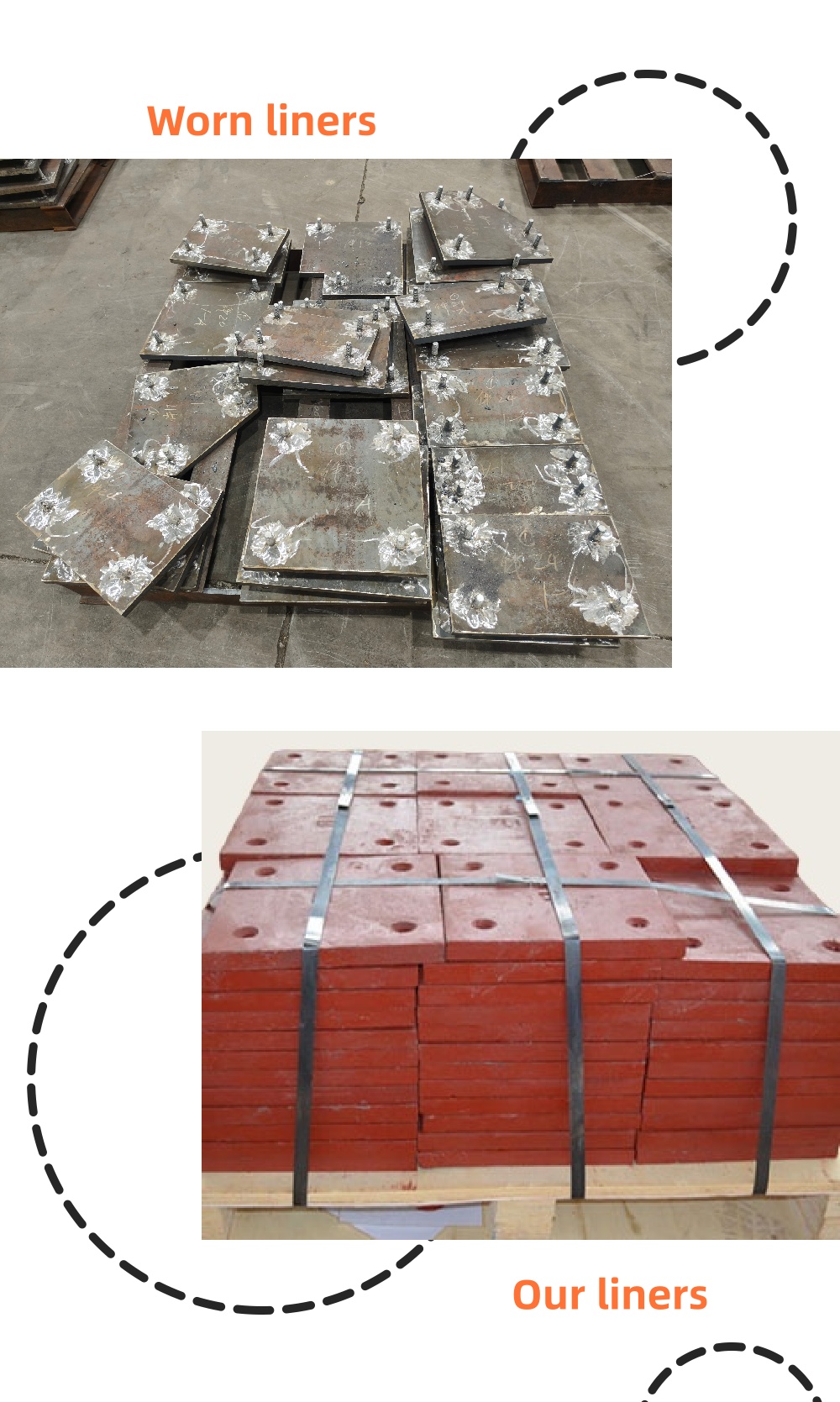
Our wear-resistant liners offer significantly enhanced resistance to abrasive wear and impact. They handle crushing operations involving hard materials—such as granite, basalt, and ore clinker—with ease, effectively delaying wear and deformation within the crushing chamber. Compared to standard liners, ours offer a service life two to three times longer, drastically reducing replacement frequency and cutting down on labor maintenance costs and losses associated with downtime. Furthermore, the liners are designed to fit the equipment structure perfectly, ensuring faster installation and superior compatibility. They consistently maintain uniform crushed particle sizes, support continuous, high-efficiency production, and help enterprises achieve genuine cost reductions and efficiency gains.